Being an Observer Makes You a Great Builder
Good Architecture takes time. Yet we are surrounded by products, platforms, and people that demand an unreasonable amount of speed from us today.
Architecture first started being recognised as a profession when people could see its effect on their surroundings and they liked what they saw. There was more order in the neighbourhoods. Navigating was no longer equivalent to going through a maze. Instead, streets were laced with beautiful, well-designed buildings. What a treat.
The next building on the street would build on what came before it. It would fix at least one problem the others had missed. That is smart work at its best.
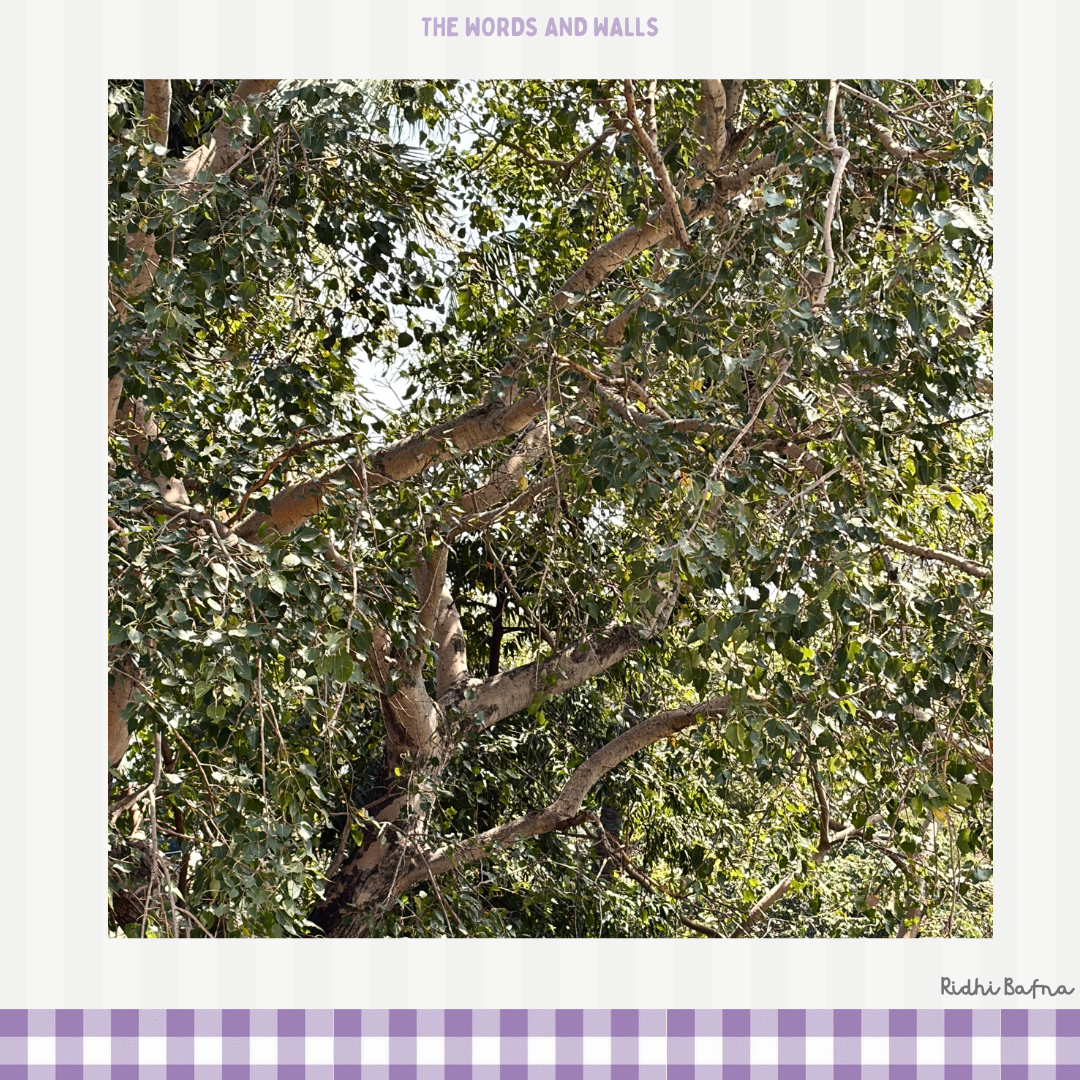
To understand the difference between then and now, imagine two people stopped cold on the street and asked to draw a tree on the spur of the moment. One draws a lollipop: a simple trunk with a cloud-shaped bush on top. The other draws a proportionate organism: every leaf in place, branches splitting into smaller fractals, the trunk slightly bent under its own weight.
What explains the difference? The easy answer is that, for the first person, that is the extent of the drawing they know. But since we are a little snoopy, we like to go layers deep.
The first person didn't draw a tree; they drew a symbol of a tree. For them, a tree is a concept, and that lollipop shape communicates "tree." Job done. The second person clearly spent time not overlooking, but observing. Things reveal themselves slowly. The longer you wait, the more you see.
When in doubt, it is best to turn to tested theories. Consider the Lindy Effect.
It tells us that for perishable items, including you the reader and me the writer, aging is a countdown to expiration. Every day we live, we are one day closer to the end of this life. But for the non-perishable—including systems, ideas, and architecture—the opposite is true. If a building has managed to stand strong through the chaos of the last 125 years, it is expected to survive for 125 more.
So if you want to build something that lasts a century or more, turn to those that have already lasted. Let that sink in; it is quite a brain flip.
The tragedy of our speedy culture is that we become unavailable for the things that demand time and patience. We tell ourselves, "I don't have the luxury of time to spare for the poetic musings of a tree." It is our folly to think that the people who know things in detail are "free" in life. In reality, it is the doomscroller who is far too free for their own good.
The person deeply observing doesn't use shortcuts because they are simply too invested in the whole story to settle for a summary.
In an architecture lecture at MIT, Julian Beinart made an observation that an engineer is not required to study the history of science, but there isn't an architecture program in the world that says you are free to skip history altogether. We often ignore history because it feels too dense and dry. In our ready-to-go world, we want the result without the research.
But like the tree, history is complex and branched. It demands our time because its ideas were derived from a thousand different sources.
Adalaj Stepwell could have simply been plain stone walls. Stone has enough character, after all. Instead, they turned it into a story wall with carvings like women churning butter, ensuring the design remains "unboring" for as long as the structure lasts.
Another fun fact is our brain isn’t a container that gets full; it’s a web that grows. It doesn't store facts in separate boxes; we "hook" new info onto things you already know. The more hooks you have, the more you can learn.
That is the essence of architecture. We take the static, layer it with history, design, complexity, simplicity, functionality, beauty, symmetry, and fractals. We turn it dynamic and it keeps evolving and growing with time.
The more your design thinking is anchored in what has already stood the test of time, the more you move from being easily replaceable to a Master Architect.
We have forgotten that our roots are the only true defence against irrelevance.